About Me
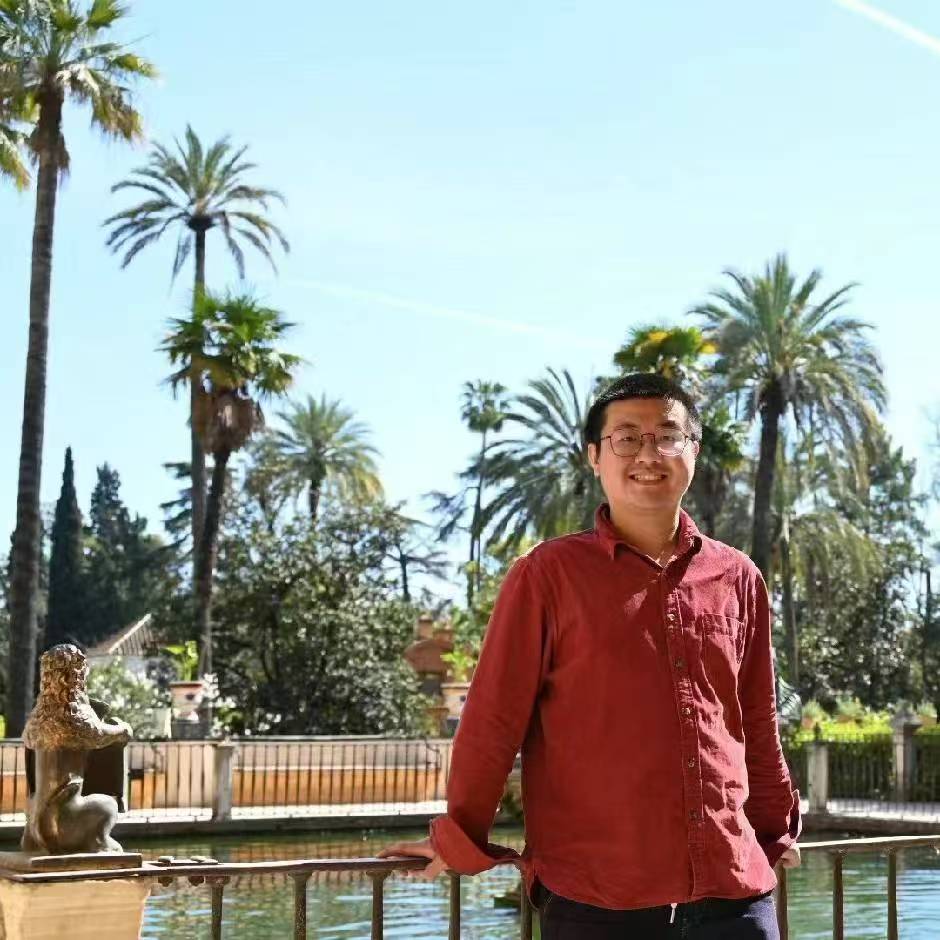
Hi, I am Jiahui Geng, an Assistant Professor in the AIICS division at Linköping University, Sweden. I received my Ph.D. in Computer Science from the University of Stavanger as a Marie Sklodowska-Curie doctoral fellow, advised by Prof. Chunming Rong and Prof. Martin Gilje Jaatun. Before joining LiU, I worked at MBZUAI with Prof. Fakhri Karray, Prof. Iryna Gurevych, and Prof. Preslav Nakov. I received my M.Sc. from RWTH Aachen University and my B.Sc. from Southeast University.
I work on AI systems that are useful in the real world and still safe to trust. My recent research focuses on large language models, multimodal models, and AI agents: how they reason, how they fail, how to adapt them efficiently, and how to make them more reliable before they are deployed.
My current research is mainly supported by TrustLLM. I also actively contribute to ReaL Lab projects including RESIST, on cyber-resilient trustworthy AI systems, and CHASS, on heterogeneous adaptive swarm systems.
You can reach me at jiahui.geng-at-liu.se.
Research
My work usually falls into three connected directions:
- Agentic and multimodal AI. I study systems that can perceive, reason, retrieve information, write code, check facts, and make decisions across text, images, and other inputs.
- Efficient model adaptation. I work on ways to steer, update, and unlearn knowledge in large models without expensive full retraining.
- Safety, reliability, and trust. I build benchmarks and methods for hallucination detection, confidence calibration, jailbreak analysis, privacy auditing, and safer deployment.
I have published in venues including ACL, EMNLP, NAACL, AAAI, ICCV, NeurIPS, ICML, ICLR, CVPR, ICSE, and IJCAI. The full list is available on my Publications page and on Google Scholar.
Students
I co-supervise four PhD students: Jingwei Mao (RESIST), Dennis Malmgren (WASP), Hoda Fakhar (TrustLLM), and Marcus Lång (TrustLLM). I also work with master thesis students, often together with industry partners.
I am happy to hear from motivated students and collaborators who are interested in trustworthy LLMs, multimodal AI, AI agents, and AI for software engineering. A short email with your CV, research interests, and any relevant papers or projects is the most useful way to start.
News
- 2026: 3 papers were accepted to ACL 2026: CoQuIR: A Comprehensive Benchmark for Code Quality-aware Information Retrieval, Is Human-like Text Liked by Humans? Multilingual Human Detection and Preference against AI, and SGPVT: Self-generated Proximal Visual Tokens for Mitigating Proximal Collateral Damage in MLLM Unlearning.
- 2026: 1 paper each was accepted to CVPR 2026 (CodeMMR: Bridging Natural Language, Code, and Image for Unified Retrieval), ICML 2026 (Spurious Rewards Paradox: Mechanistically Understanding How RLVR Activates Memorization Shortcuts in LLMs), ICLR 2026 (Knowledge Externalization: Reversible Unlearning and Modular Retrieval in Multimodal LLMs), ICSE 2026 (LLM4JMH: Studying the Use of LLMs for Generating Java Performance Microbenchmarks), and ICASSP 2026 (LongSpeech: A Scalable Benchmark for Transcription, Translation and Understanding in Long Speech).
- 2026: Not All Secrets Are Equal: Type-Aware Unlearning for Language Model Secret Removal was accepted to ECML 2026. Congratulations to Hoda!
- 2025: 5 papers were accepted to ACL 2025: VSCBench: Bridging the Gap in Vision-Language Model Safety Calibration, Con Instruction: Universal Jailbreaking of Multimodal LLMs via Non-textual Modalities, HD-NDEs: Neural Differential Equations for Hallucination Detection in LLMs, Shaping the Safety Boundaries: Understanding and Defending against Jailbreaks in LLMs, and Marco-Bench-MIF: On Multilingual Instruction-Following Capability of Large Language Models.
- 2025: 1 paper was accepted to AAAI 2025: Internal Activation Revision: Safeguarding Vision-Language Models without Parameter Update.
- 2025: 1 paper was accepted to ICCV 2025: SAUCE: Selective Concept Unlearning in Vision-Language Models with Sparse Autoencoders.
Service
- Workshop and conference organization
- Workshop Chair, International Conference on Blockchain Research and Applications (2026, Palermo, Italy)
- Organiser, FinMMEval Lab 2026: Multilingual and Multimodal Evaluation of Financial AI Systems (2026, Jena, Germany)
- Organiser, NeurIPS Workshop on Embodied and Safe-Assured Robotic Systems (2025, Mexico City, Mexico)
- Organiser, COLING Workshop on Machine-Generated Content Detection (2025, Abu Dhabi, UAE)
- Editorial roles
- Area Chair, ACL ARR (2024-present)
- Associate Editor, Journal of Cloud Computing, Advances, Systems and Applications (2024-present)
- Associate Editor, Knowledge Engineering Review (2024-present)
- Youth Editorial Board, Blockchain: Research and Applications (2025-present)
- Reviewing
- Grant Expert Reviewer, National Science Centre (NCN), Poland
- Conference PC / reviewer: NeurIPS, ACL, ICLR, CVPR, ICCV, AAAI, ECCV, ECML
- Journal reviewer: Nature Communications, ACM TOSEM, IEEE TSE, IEEE TNNLS, JMLR, IEEE TBD, IEEE TOIS, IEEE TII